
Why Broken Bow Is Oklahoma’s Best-Kept Trout Fishing Secret
We will let you in on something most people never hear about until they experience it firsthand. Broken Bow trout fishing is not just good. It is genuinely world-class, and it happens right here in southeastern Oklahoma, tucked away in the forested hills where the Lower Mountain Fork River flows cold and clear beneath towering pines. Most anglers picture Colorado or Montana when they think of trout fishing, but we have watched seasoned fishermen stand knee-deep in our tailwater and shake their heads in disbelief at what they have been missing. The truth is, Beavers Bend OK holds secrets that even some local trout fishing guides keep close to the chest. We are going to change that today. Whether you are planning your first guided trout fishing trip or you have fished these waters a dozen times, this article is going to give you the insider knowledge that transforms a decent day on the water into something you will never forget. From the exact techniques that produce fish when nothing else works to the seasonal patterns that most visitors completely overlook, we are pulling back the curtain on everything we know about trout fishing in Broken Bow Oklahoma.
The Lower Mountain Fork River: Understanding the Water Most Anglers Misread
Why This Tailwater Behaves Differently Than You Think
The Lower Mountain Fork River is the lifeblood of Beavers Bend trout fishing, and it is also the single most misunderstood piece of the puzzle. Water releases from Broken Bow Lake create a cold tailwater environment that sustains rainbow trout year-round, something almost unheard of at this latitude. But here is what most visitors miss entirely: the generation schedule from the dam dictates everything. When the generators run, water levels rise dramatically, flows increase, and the trout change their behavior completely. We have seen anglers show up at peak generation times and cast into water that has turned from a gentle wade-friendly stream into a fast, deep river, then wonder why they cannot catch a thing using the same approach they used that morning.
We pay close attention to the U.S. Army Corps of Engineers generation schedule, which you can check through their daily reports. During low-water or no-generation periods, the river drops and clears, creating ideal conditions for sight-fishing and wading. Rainbow trout stack up in predictable pools, eddies, and runs. During generation, those same fish scatter, hold tight to structure, and feed differently. Understanding this single variable gives you a massive advantage over ninety percent of the people fishing the Lower Mountain Fork River on any given day.
Water Temperature, Clarity, and What They Mean for Your Approach
Water temperature below the dam typically stays between 48 and 58 degrees Fahrenheit, which is the sweet spot for rainbow trout metabolism and feeding activity. However, clarity changes with rain events, seasonal runoff, and generation intensity. After a heavy rain, the river can take on a stained appearance that pushes visibility down to a foot or less. When this happens, we switch to brighter-colored offerings and focus on scent-based presentations. In clear conditions with low water, subtle and natural presentations dominate.
Weather conditions also play a larger role than most people realize. Overcast days tend to produce more aggressive surface feeding, while bright sunny days push trout into shaded lies beneath overhanging timber and undercut banks. We have found that barometric pressure drops, especially ahead of frontal systems, consistently trigger some of the best feeding windows we experience all year on the Lower Mountain Fork River. Keeping a weather app handy and cross-referencing it with the generation schedule is a combination that separates those who catch fish from those who simply enjoy the scenery.
Trout Fishing Techniques the Guides Use When the Pressure Is On
Fly Fishing for Trout: Beyond the Basics
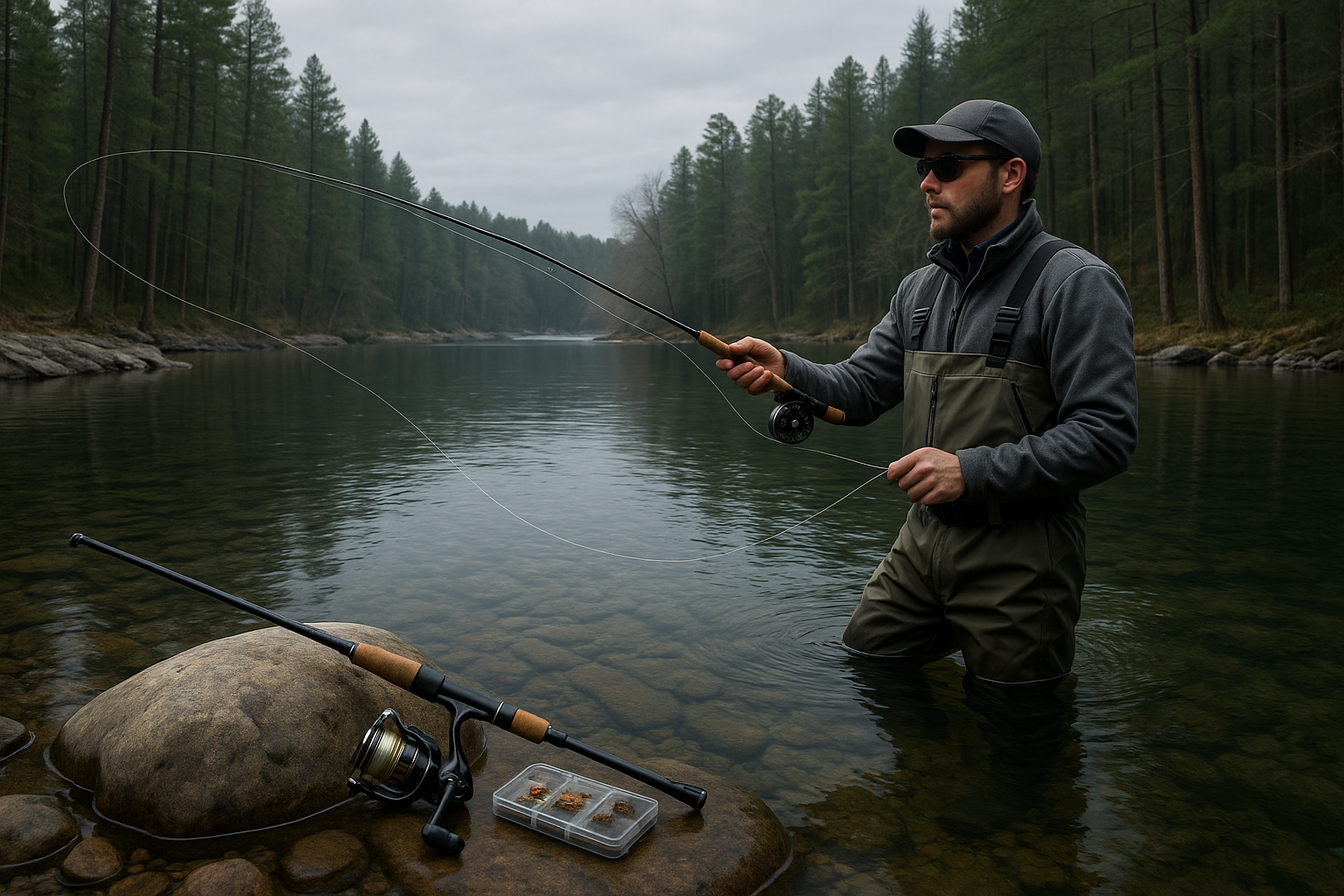
Fly fishing for trout on the Lower Mountain Fork River is a deeply rewarding experience, and it is also where the biggest gap exists between what beginners attempt and what actually works. Most visitors tie on a basic woolly bugger or a generic nymph pattern and start casting. That will catch fish occasionally, but it will not produce consistently. Our fly-fishing guide team relies heavily on nymphing techniques, specifically Euro-nymphing and tight-line methods, to stay in contact with the fly in the varied currents of this river. The key is keeping your fly in the strike zone, which is typically within six to twelve inches of the bottom, for as long as possible during each drift.
During hatch activity, dry fly fishing can be electric. We watch for midges, blue-winged olives, and occasional caddis hatches, particularly during the cooler months and on overcast mornings. Matching the hatch size and silhouette matters more than exact color on this river. A size 18 parachute Adams or a comparadun pattern in olive or gray will outperform a flashy attractor pattern nine times out of ten when trout are keyed in on surface insects. We also use drift fishing techniques with small egg patterns and San Juan worms during high-water periods when trout position themselves along seams and slower current breaks.
Spin Casting for Trout: The Underrated Approach
We want to be clear about something that some fly-fishing purists might not appreciate: spin casting for trout is incredibly effective on this river, and there is absolutely nothing wrong with it. In fact, spin cast trout fishing is often the best choice for families, beginners, and anyone who wants to maximize their time catching fish rather than learning a new casting technique on the water. Our guided trout fishing trips frequently incorporate spinning gear, especially for first-timers and younger anglers, because it allows them to start catching rainbow trout within minutes of stepping into the river.
The secret to successful spin casting for trout here is downsizing everything. We use ultralight rods in the four to five foot range, spooled with two to four-pound test monofilament or fluorocarbon line. Small inline spinners like Rooster Tails in sizes 1/16 to 1/8 ounce are reliable producers. Micro jigs tipped with a small piece of PowerBait or a live wax worm are also deadly. When it comes to trout fishing bait, we have found that a simple combination of a small split shot, a size 10 or 12 hook, and a piece of whole kernel corn or a salmon egg will outfish elaborate rigs. Trout fishing tackle does not need to be complicated to be effective. The right presentation in the right spot matters far more than expensive gear.
Planning Your Trout Fishing Trip to Beavers Bend OK
Best Time for Trout Fishing in Oklahoma and What to Bring
One of the most common questions we hear is about the best time for trout fishing in Oklahoma. The honest answer is that the Lower Mountain Fork River fishes well year-round, but certain windows stand out above the rest. Late fall through early spring, roughly November through March, is peak season. Water temperatures are at their coldest and most consistent, trout are actively feeding and holding in predictable locations, and fishing pressure drops significantly compared to summer weekends. We personally consider January and February to be the finest months for trophy-size rainbow trout.
Summer fishing is still viable, but it requires more strategy. The river receives heavy stocking from the Oklahoma Department of Wildlife Conservation, which supplements the fishery regularly. Summer trout tend to concentrate near the coldest water sources, particularly close to the dam outflow and in deeper pools with spring seeps. Early morning and late evening are the productive windows during hot months.
Knowing what to bring trout fishing can make or break your experience. Here is our recommended trout fishing tackle and gear list:
– A light or ultralight spinning rod, or a 3 to 5 weight fly rod
– Polarized sunglasses for spotting fish and reading water
– Waders or wading boots with felt or rubber soles for rocky footing
– A selection of small spinners, jigs, and soft plastics for spin fishing
– Nymph patterns, dry flies, and streamers for fly fishing
– Trout fishing bait such as PowerBait, corn, wax worms, or salmon eggs
– A valid Oklahoma fishing license with a trout permit
– Sunscreen, a hat, and layered clothing for changing weather
– A landing net with a rubber mesh bag for catch and release trout fishing
Speaking of licensing, every angler 16 and older needs a valid Oklahoma fishing license and a separate trout fishing permit to fish the Lower Mountain Fork River. Non-residents can purchase these online through the Oklahoma Department of Wildlife Conservation website at wildlifedepartment.com. We always remind our guests to handle this before arriving so there are no surprises at the river.
Catch and Release Regulations and Ethical Fishing Practices
The Lower Mountain Fork River has specific catch and release trout fishing zones that every angler must understand. Certain stretches of the river are designated as catch and release only, meaning all trout must be returned to the water unharmed. Other sections allow harvest within daily limits. Knowing which zone you are standing in is not optional. It is a legal requirement and an ethical responsibility. Signage is posted along the riverbanks, and we always walk our guided trout fishing trips clients through the regulations before we start fishing.
We practice careful handling techniques with every fish. Wet your hands before touching a trout, minimize air exposure, and use barbless hooks whenever possible for quick, clean releases. These practices help maintain the health of the fishery and ensure that the rainbow trout population in Beavers Bend State Park continues to thrive for future generations of anglers.
Why a Trout Fishing Guide Makes All the Difference in Beavers Bend
Guided Trout Fishing Trips for Every Skill Level
We have seen it happen hundreds of times. An angler drives hours to reach Broken Bow Oklahoma, picks a random stretch of river, and spends the day frustrated. Then they book a guided trout fishing experience the next morning and wonder why they did not start there. A Broken Bow trout guide does not just put you on fish. A skilled trout fishing guide reads the water conditions in real time, adjusts techniques based on what the trout are doing that specific hour, and teaches you skills that will serve you for the rest of your fishing life.
Our Beavers Bend trout guide team specializes in both fly-fishing guide services and spin cast trout fishing instruction. We tailor every trip to the skill level and goals of our guests. If you have never held a rod, we will have you catching rainbow trout within your first hour. If you are an experienced angler looking to refine your nymphing technique or explore new water, we take you to spots that do not appear on any public access map. Our guided trout fishing trips include all necessary trout fishing gear and tackle, so you do not need to pack a thing beyond your license and your enthusiasm.
Family Trout Fishing Trips and the Complete Beavers Bend Experience
Family trout fishing trips are one of our absolute favorite things to guide. There is nothing quite like watching a child hook their first rainbow trout and seeing that pure, unfiltered excitement on their face. We design family trout fishing trips with patience, safety, and fun as the top priorities. We select calm, wadeable sections of the river, provide kid-friendly gear, and keep the instruction simple and encouraging. Parents often tell us it was the highlight of their entire Beavers Bend OK vacation.
And speaking of vacations, the area surrounding Beavers Bend State Park offers an incredible range of lodging options. Hochatown cabins and Broken Bow cabins are scattered throughout the forests within minutes of the river, many featuring hot tubs, fireplaces, and stunning views. Booking a cabin near the Lower Mountain Fork River and pairing it with a rainbow trout fishing package creates the kind of getaway that families and groups talk about for years. Several of our guests combine their cabin stay with multiple days of guided fishing, hiking the trails at Beavers Bend State Park, and exploring the restaurants and shops in Hochatown.
If you have been searching for trout fishing near me and you are anywhere within driving distance of Broken Bow, you owe it to yourself to experience this fishery with a knowledgeable trout fishing guide by your side. The combination of stunning scenery, consistent fish populations, and a genuine small-town Oklahoma atmosphere makes Broken Bow trout fishing unlike anything else in the region.
Your Next Step Toward an Unforgettable Day on the Water
We have shared the secrets that most anglers never discover on their own, from reading the generation schedule and adapting your technique to understanding the seasonal patterns that put more rainbow trout in your net. We have covered the trout fishing tips for beginners that flatten the learning curve and the advanced strategies that challenge even experienced fishermen. We have talked about what to bring, where to stay, and why a guided trout fishing experience is the single smartest investment you can make for your time on the Lower Mountain Fork River.
Now it is your turn. Whether you are a solo angler chasing a personal best, a couple looking for a unique outdoor adventure, or a family ready to create lifelong memories in Beavers Bend OK, we are here to make it happen. Our team at Broken Bow Trout Pro lives for these moments, and we would love nothing more than to share them with you.
Visit us at brokenbowtroutpro.com to browse our guided trout fishing trips, check availability, and book your Broken Bow trout fishing adventure today. Reach out with any questions at all. We are always happy to help you plan the perfect trip, and we cannot wait to see you on the river.